Bart Farrell: First things first, who are you? What's your role? Where do you work?
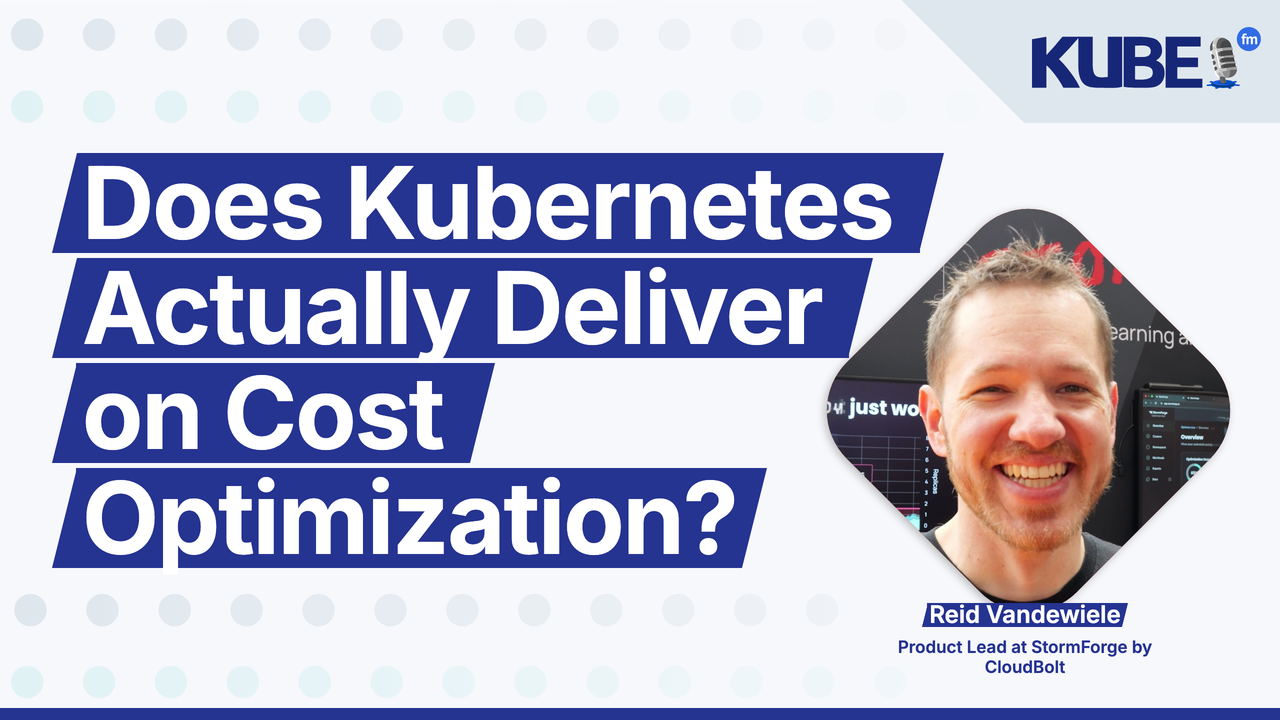
Reid Vandewiele: My name is Reid Vandewiele. My role is product lead at StormForge by CloudBolt.
Bart Farrell: What are three emerging Kubernetes tools that you're keeping an eye on?
Reid Vandewiele: so we just talked about this last November, And for me, not a lot has changed. I'll highlight the two I said last time. I'm still paying attention to dynamic resource allocation, especially now this GA. And also still paying attention to in-place pod resizing, especially because now that we're starting to incorporate it into our own tools, I'm still learning a lot more about it, where it works and doesn't work. At the risk of being Just saying the same thing everybody else is. I'm paying attention to how is MCP going to be standardized into Kubernetes? Because all of my tools now want to interact with it directly and not just me doing it for them.
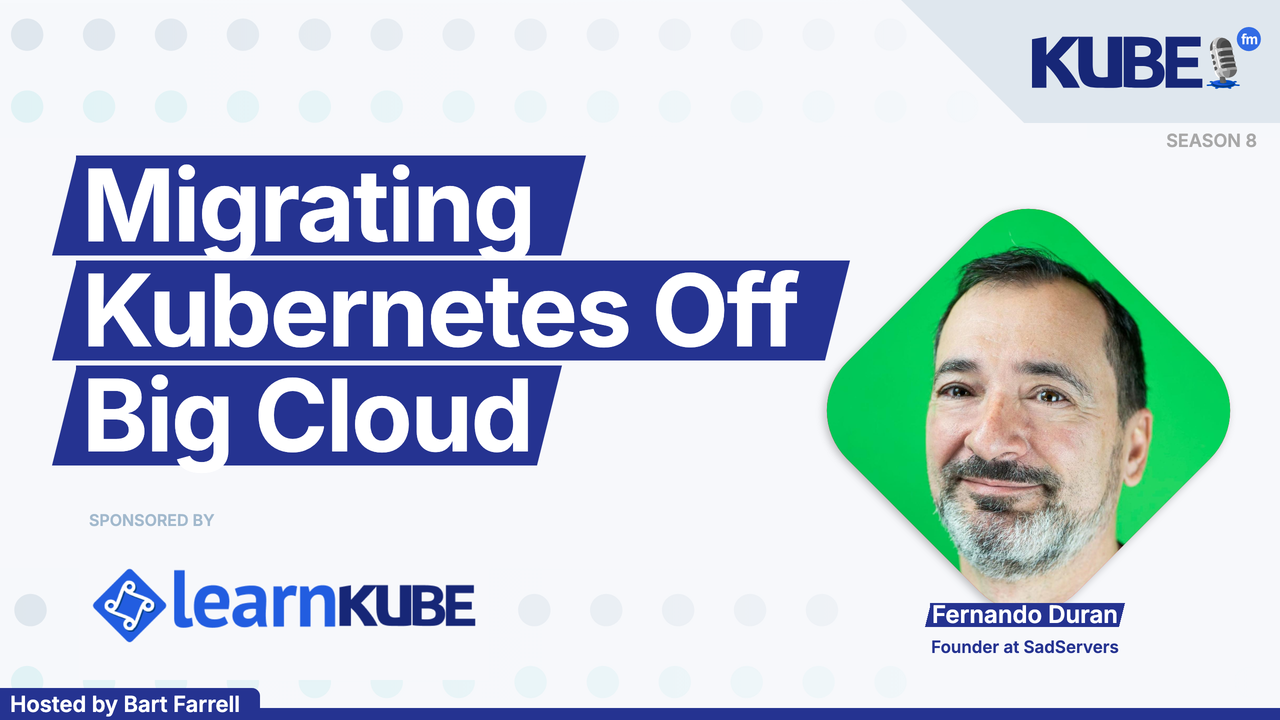
Bart Farrell: Our podcast guest, Fernando, argues that Kubernetes never delivered on its promise of reducing infrastructure costs through bin packing. Instead, he sees standardization and extensibility as the real advantages. Has your experience matched this?
Reid Vandewiele: In terms of is the real benefit the standardization of the platform? Absolutely. So because we work with a tool that is designed to provide a specific benefit across anything that can be Kubernetes, whether it's on one of the big three clouds, or a smaller cloud or on prem, focusing on the standardization has allowed us to deliver a specific benefit to anybody who's using Kubernetes as a spec. So in that sense, we have seen that. We are a bin packing optimization tool. So I don't know that we're not seeing a benefit on that side. But the standardization is absolutely where we see the most of the value.
Bart Farrell: Fernando also describes discovering that his GKE Autopilot proof of concept was costing close to $1,000 a month due to balloon pods, minimum CPU to memory ratios, and unexpected metrics change charges. How do you handle cost visibility in managed Kubernetes?
Reid Vandewiele: I'm going to say something about Autopilot specifically first. So Autopilot's interesting because it basically forces you into guaranteed quality of service for every workload. which is naturally going to balloon costs. Before we even get into visibility, if you're trying to optimize costs in Kubernetes, guaranteed quality of service is not the way to do it because you're disallowing yourself from doing any over-provisioning at all, which is where you get cost management from, is mostly shared resourcing. But in terms of how do we manage that, we mostly don't look at it because we run and build a tool that tries to automatically make sure you're optimized to begin with. And from that standpoint, it's usually not something we're paying a lot of attention to. That said, years ago, we were partnered with Kubecost. These days, we're trying to provide a similar solution ourselves for understanding the actual cost going into these things. But I would say it's largely an open problem still.
Bart Farrell: Alessandro thinks you should check the CNCF landscape before building custom tools to stand on the shoulders of giants. How do you approach the build versus buy decision in Kubernetes?
Reid Vandewiele: We're an organization that focuses heavily on one specific complex problem in Kubernetes. As such, we're very acutely aware of the fact that we are not the experts in everything that's out there. And especially with the CNCF landscape being as diverse and rich as it is, we always tend to try and find something that somebody else has done rather than build it ourselves. We run into a lot of people who, when you first approach a problem, especially in Kubernetes, they often seem tractable. But this is one of those complex systems where it's amazing how deep these things can go. And you won't know until you try. but our philosophy has generally been if there's a tool out there that does it well, especially if it's open source, you can contribute back to it. This works way better to stand on the shoulders of people who have gone before and people who are actively maintaining and moving it than to try and do it in house. If the problem is small enough and specific enough, I imagine there are use cases where it makes sense. But we tend to try and reuse.
Bart Farrell: Kubernetes turned 10 years old almost two years ago. What should we expect in the next 10 years?
Reid Vandewiele: especially with all the changes that have gone in the last year with regards to these new and emerging technologies. I truly can't tell you what I think is going to happen in 10. That is such a massive time scale that I think it's almost like writing science fiction to try and guess that right now.
Bart Farrell: What's next for you?
Reid Vandewiele: For me, I think I mentioned earlier that we're a company focused on a very specific complex problem. What's immediately next for me is digging even deeper into our core competencies. And so learning more about exactly how we can leverage those new features coming out, like DRA and in-place pod resizing to do what we do better.
Bart Farrell: How can people get in touch with you?
Reid Vandewiele: I think LinkedIn is the best way to reach out to me. If you don't already have a contact, I don't pay attention to a lot of other social media.