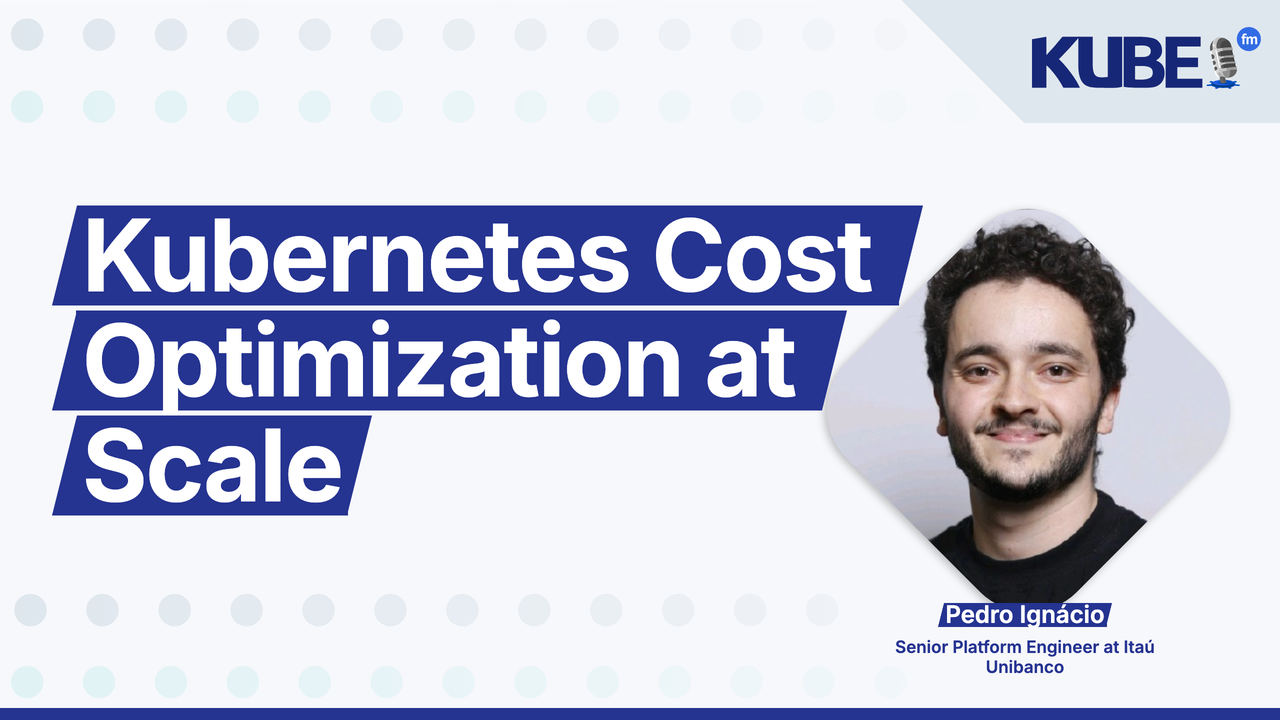
Bart Farrell: First things first, who are you? What's your role? And where do you work?
Pedro Ignácio: Right. So very nice to meet you. My name is Pedro. I am based in Brazil. I'm a senior platform engineer for a company called Itaú Unibanco. We're a bank in Brazil and one of the biggest banks in Latin America.
Bart Farrell: And Pedro, what are three emerging Kubernetes tools that you're keeping an eye on?
Pedro Ignácio: Right. So I like Knative a lot. We do have like a bunch of AI stuff right now. So I think I'll stick to it. I like K8sGPT as well. It helps us, SREs, platform engineers, to debug issues in production, to debug issues across all of our environments. And I like Kubeflow a lot. So I'd like to train our models to do some machine learning stuff. Those, I think, are the most important ones right now.
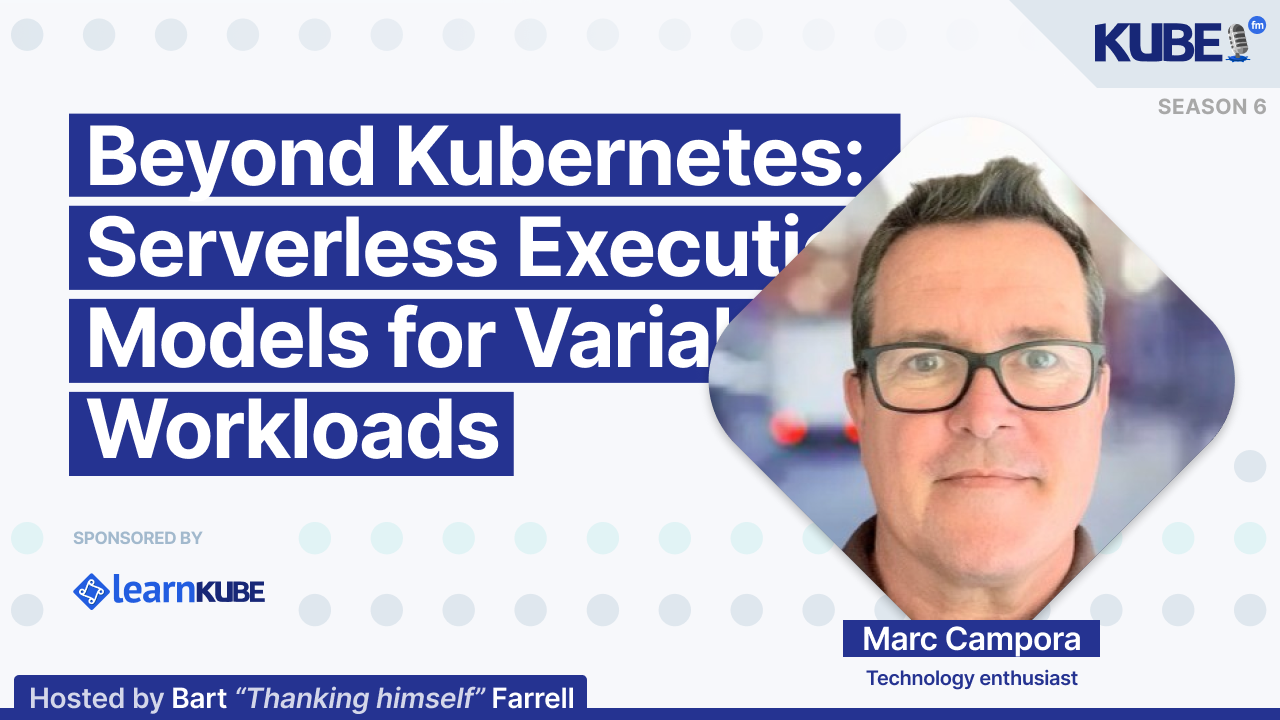
Bart Farrell: One of our podcast guests, Marc Campora, while speaking about Kubernetes cost optimization, he said the following. It's quite easy to pay more than necessary because you pay for allocated or provisioned infrastructure, machines you start that are often underused. What strategies do you use to optimize Kubernetes costs?
Pedro Ignácio: Right. So right now we're approaching on two different paths, right? So we're trying to optimize our application build. So our application, when it gets deployed into production, it's already optimized as a whole. So the way we expect at the most. And we're also trying to use observability solutions to understand better the costs, the resources we are using, requesting, and the resources that are created on the cluster. So this way we can adjust our deployments, adjust our infrastructure, and we can use tools like Karpenter as well to automatically deploy new nodes, to call some new nodes, some other nodes, and so on.
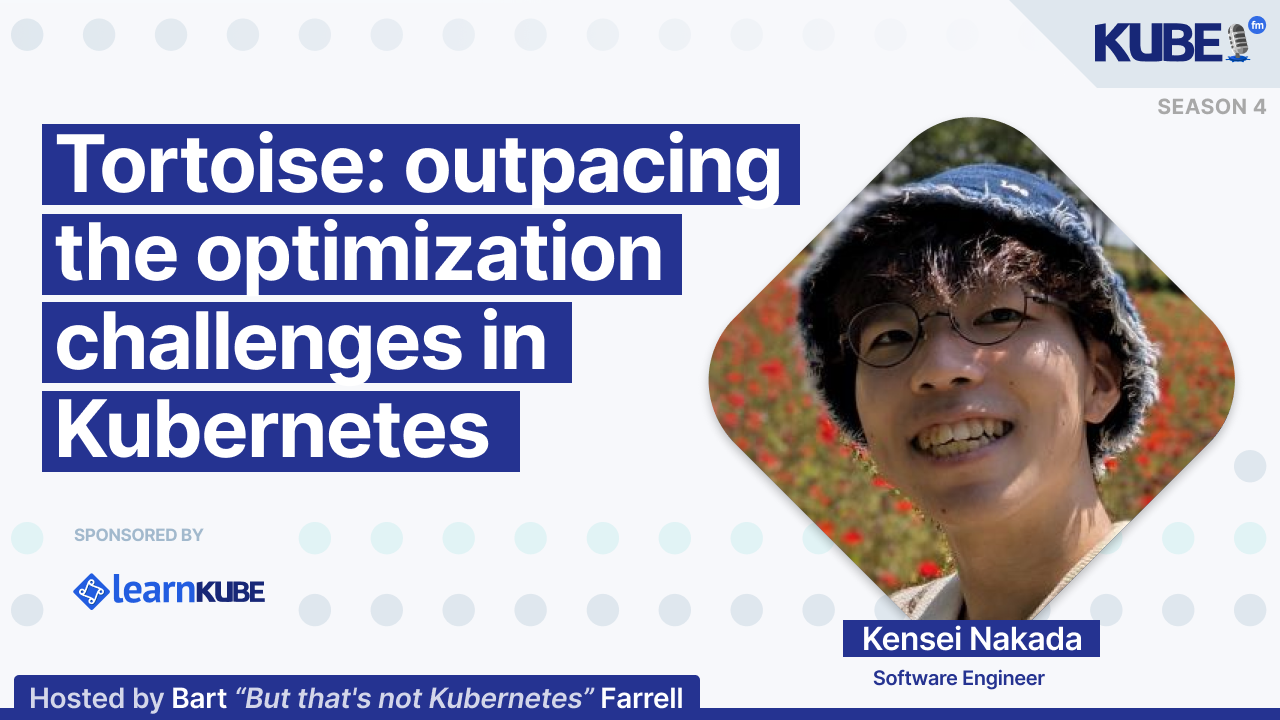
Bart Farrell: Our podcast guest, Kensei Nakada, while speaking on the subject of Tortoise autoscaling, Kensei said he'd been looking forward to in-place pod resizing for years. Karpenter turns 1.0. It's an exciting time for scaling and resource optimization in Kubernetes. Where do you see this field evolving in the future?
Pedro Ignácio: Yeah, to be completely honest with you, I really like Karpenter a bunch, but my main issue right now is I need to get support for other cloud providers as well. So I would like to see more of Azure, of Google, integrated into this open source scenario where they can take the Karpenter features and adjust to their clusters and not only a specific provider solution. So Karpenter works very well for Kubernetes cluster on AWS. But we like basically some solution that would work for all the Kubernetes clusters, for all the platforms. And the pod inside, in-cluster pod right-sizing, sorry. It's a very nice solution. It's very nice for us to not need to restart our deployments, to redo basically everything, just to take some of the configurations on the pod, on the manifest, and the resources we are using on the cluster.
Bart Farrell: Kubernetes turned 10 years old last year. What do you expect in the next 10 years to come?
Pedro Ignácio: Yeah, so we need to keep the community hooked up. We need to keep evolving our features. I think we, I'm very glad at least with the feature adoption. So Kubernetes is one, of course, you guys know, is one of the most important open source solutions right now. And we usually get some very quick feedback on the solutions we need, on the issues we need addressed. So I would like, basically, I don't want a specific technical feature. I would like... to a cultural one. So we need to keep the community hooked up to get more contributors, to get Kubernetes to be a solution with more enterprise adoption, with more support, not only for individual contributors, but also enterprise contributors as well. So we can provide our developers the right amount of resources, the right amount of time, and they can work in the solution as we do right now, as we have right now, and keep growing the platform as a whole. What's next for you, Pedro? Well, I think I need to keep optimizing my resource usage on Kubernetes. And I work with observability. So this is a field where we need constant improvement. So I would say that I would like to see more stuff regarding not only resource consumption, but also observability, security as well. And again, see the community grow and see the community help those projects to grow themselves.
Bart Farrell: And how can people get in touch with you?
Pedro Ignácio: Well, I'm on LinkedIn. I'm usually very active. I'm also on Twitter which I don't use that much other than to share some soccer insights, but please hit me up on LinkedIn. I'll be happy to talk to you I'll have to connect with you and I'll love to hear your stories.
Bart Farrell: What's one soccer insight that you'd like to share?
Pedro Ignácio: Well, São Paulo is the best club in Brazil You guys have to stop hearing about Flamengo about Palmeiras about Corinthians as well. São Paulo is the biggest one Brazil is the best country on soccer in the world. You don't have to hear about Argentina, right? So Pelé is bigger than Maradona as well. And those are all honest insights that you should listen to me.
Bart Farrell: Very good. Best football club in Europe.
Pedro Ignácio: I like Real Madrid, but I also like Liverpool as well. I really like English football, so I'll try to stick with Liverpool this time.