Bart: So, first things first: Who are you? What's your role? And where do you work?
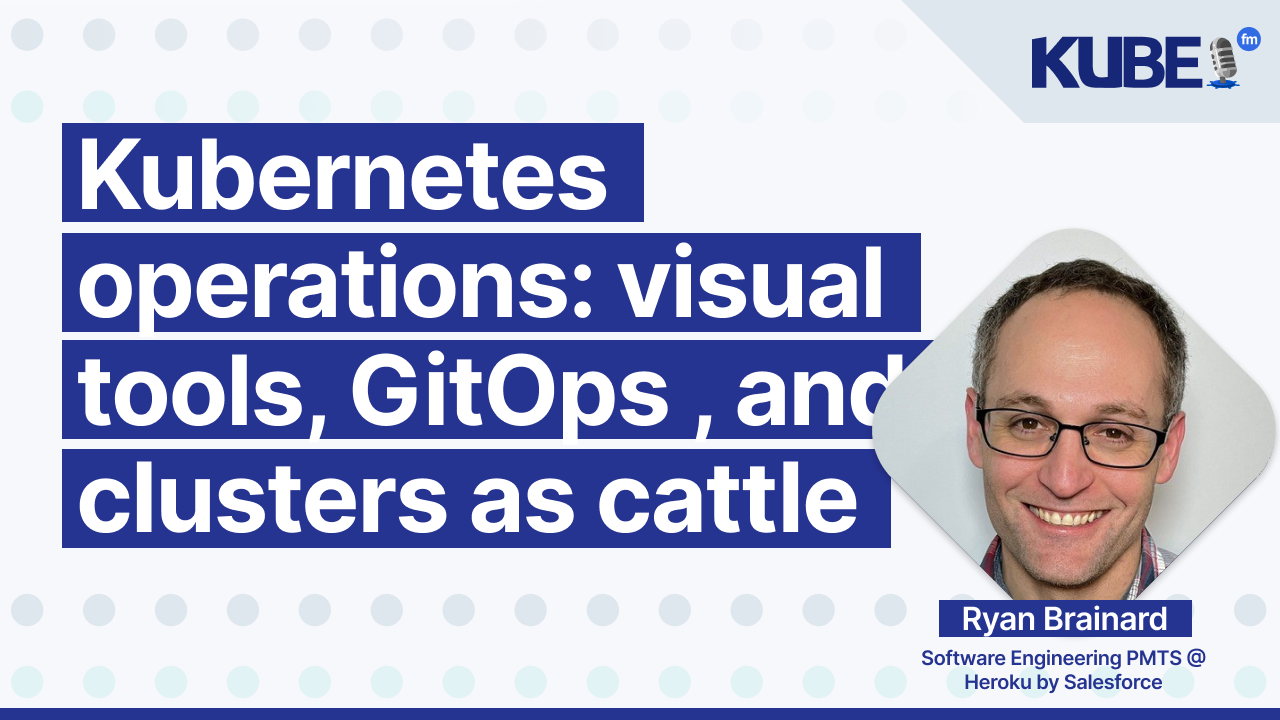
Ryan: Hi, I'm Ryan Brainard. I work at Heroku by Salesforce as a principal software engineer on the builds team.
Bart: What are three emerging Kubernetes tools that you're keeping an eye on?
Ryan: I'm always keeping an eye on the OpenTelemetry (OTEL) space. We use that a lot. K9s, we're using a lot too. Karpenter, we've really leaned into that. That's really helped us recently as well.
Bart: Our podcast guest, Oleksii, strongly advocates for graph-based visualization when assessing Kubernetes workloads, arguing that visual representations are consumed much faster than text. How important is visualization in your Kubernetes workflow, and do you find that teams over-rely on CLI tools when visual tools might be more effective?
Ryan: We use visual tools a lot. We really lean into Honeycomb, which is our biggest visual tool. We're running multiple clusters, so we have all our metrics flowing into it, making it easy to see everything at a glance. We can share dashboards with coworkers, which makes spotting trends more discoverable. Recently, I've been taking screenshots and sending them into AI tools like Claude, which has been super helpful. Instead of sending raw data for processing, I found it works much better to provide a pre-rendered graph that works out of the box. Of course, we also use a ton of CLI tools, but visual tools can be really helpful.
Bart: Oleksii relies heavily on K9s for configuration deep dives, saying it's much more convenient than repeatedly typing kubectl commands. What tools do you use for diving deep into Kubernetes configurations, and are there capabilities you wish existed in the Kubernetes tooling ecosystem?
Ryan: We're also really big K9s users. Since I've adopted it, I almost rarely use kubectl anymore. It's almost surprising when I have to go back to it—I forget the commands. We're fine with K9s, especially with custom columns that expose data we're always looking for, diving in, getting plugins, and learning keyboard shortcuts. It's incredibly helpful. We're kind of living and breathing in that every day.
Bart: And our guest, Ryan, believes that GitOps provides a crucial source of truth and that configuration drift was a major problem with their Helm-based pipelines. How critical is preventing configuration drift in your Kubernetes environments? And do you think GitOps is the only viable solution at scale?
Ryan: I can't imagine us running what we do without GitOps. For every commit and push, we run through CI, use Skaffold, render all of our Kustomize, create our images, and generate an immutable release that gets deployed into clusters. We're not making any changes manually on a day-to-day basis.
We're lucky because we have immutable and ephemeral workloads. We can tear down clusters whenever we want and stamp a new one, which makes upgrades super easy. We treat the whole cluster as cattle, not pets, which makes things much easier. Kubernetes turned 10 years old last year.
Bart: What should we expect in the next 10 years?
Ryan: AI is probably the next big thing, both AI to run Kubernetes and then Kubernetes also running AI. That's been a huge trend and topic here at KubeCon. I'm definitely looking forward to that.
Bart: What's next for you?
Ryan: It's exciting here at KubeCon learning about the Dynamic Resource Allocation (DRA) stuff that's coming out to be able to do resource allocation. We might start looking into the AI parts that can help make my job easier. A lot of exciting things are happening.
Bart: How can people get in touch with you?
Ryan: Find me on LinkedIn. Ryan Brainard.