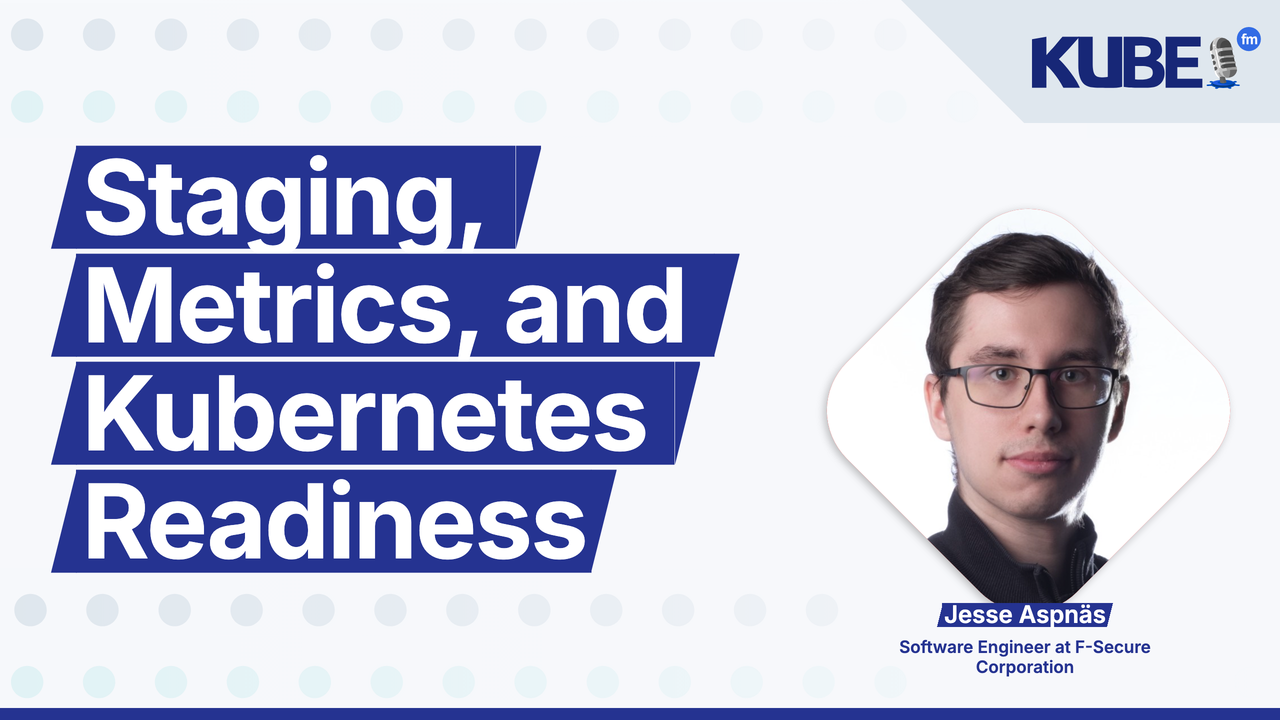
Bart Farrell: So first things first, who are you, what's your role, and where do you work?
Jesse Aspnäs: Hi, I'm Jesse. I work in platform engineering at F-Secure as a platform engineer.
Bart Farrell: Missing readiness checks usually show up through something concrete. Traffic reaches a pod too early, autoscaling behaves strangely, or users report errors. If a team wanted to catch this before users do, where would you have them look first?
Jesse Aspnäs: So the ideal thing, in my opinion, is to have a separate staging or CI environment, whatever you want to call it. It doesn't have real users but still has some kind of traffic constantly hitting the pod. Then kind of when you do deployments especially rotating pods whatever then you kind of look at the metrics are there random request failures you look at kind of the logs preferably with some automatic analysis that are there weird failures or some 5xx's at the start timeouts whatever.