Bart Farrell: All right, so who are you? What's your role and where do you work?
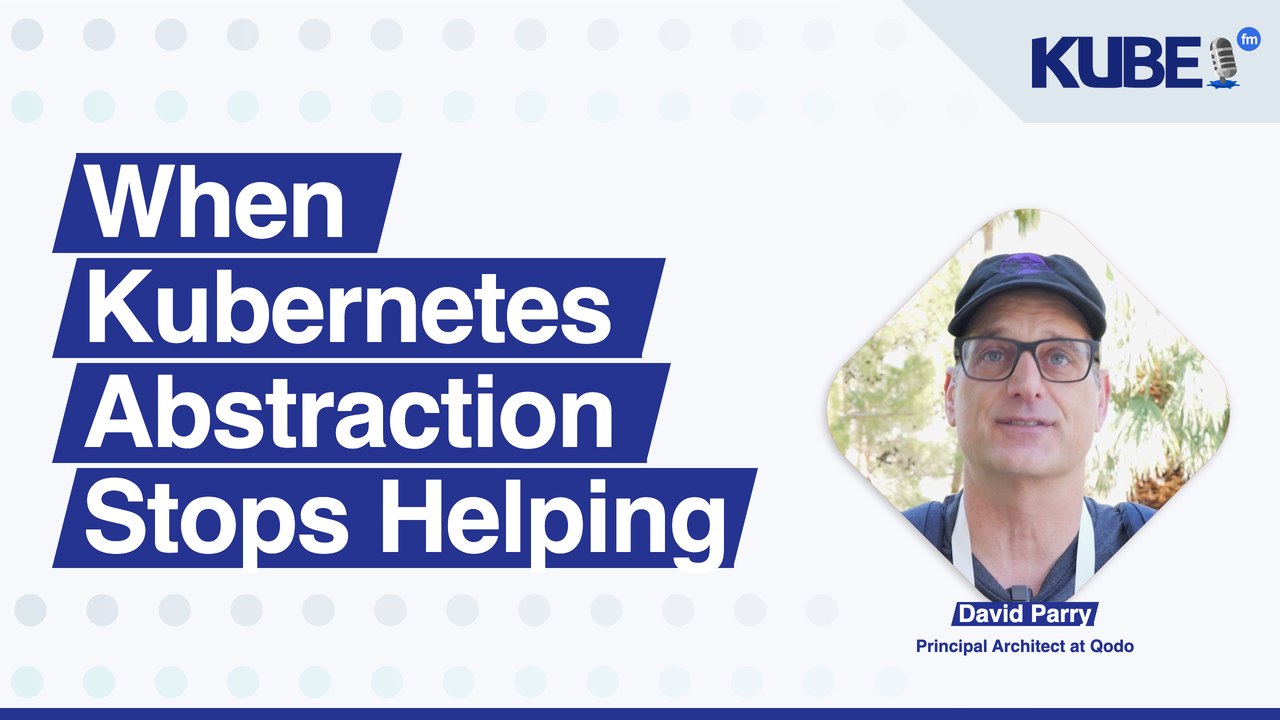
David Parry: Hi, I'm David Parry. I'm a principal architect. I work for Qodo. I'm in our professional services division.
Bart Farrell: Are there any Kubernetes tools that have been catching your attention lately?
David Parry: Not really right now. I'm used to the basic ones like Rancher. It's just this morning I was working and doing some work with Rancher and just using those tools. So I'm more in the side of development and helping doing agentic.
Bart Farrell: There is growing interest in using AI systems to operate Kubernetes rather than just generate YAML. Which cluster operations would you hand over first and which ones are too risky to automate?
David Parry: So I wouldn't hand over any of them right now because the way our whole companies are right now, you need that accountability. So you still, until we can get rid of the accountability of a human that needs to be answering for those needs. I would say what you need to hand over is to help out your developers using AI to assist them. And that's where you're going to get it. So your DevOps teams can be really augmented and help create that YAML file and create those configurations and review your logs and ensure and put in those checks. But again, you still need that human in the loop.
Bart Farrell: Our podcast guest, Mai, says AI for Kubernetes operations is amazing, but not ready to be deployed in production without guardrails. What guardrails do you think are necessary for AI tools?
David Parry: There's so many different guardrails, depending on your company and depending on your deployments and what you need. I would go more to the fact of one, you do need those. And I agree with her because of the laws and the accountability that, you know, you can't just have a Kubernetes going and sharing everyone's passwords and everyone's personal information. So I think that you use these tools to help you do those governance and the guardrails there depending on what your team and what you need, but they need to be deterministic. So you need to still set up these rules. And so like at Qodo, when you do the code review, you would have guardrails set up into our rule system. so that you can actually inspect your YAML and your other configurations to make sure you're following those policies and that governance is set there for you.
Bart Farrell: Internal platform teams often say developers should not need to know Kubernetes. Do you agree or do teams build better systems? Would application engineers still understand some of the platform underneath them?
David Parry: I come from the architect and the developer side more than the DevOps side. And I think that a developer better know Kubernetes and better have an understanding of it. And for many years now, all of my teams run Docker or Docker Desktop or some other type of runtime on their laptop so they can have an understanding and do some testing and have that responsibility. It's not kicking over the fence.
Bart Farrell: Managed Kubernetes services keep promising to remove operational burden. At what point does abstraction stop being helpful because your team can no longer explain or debug what happened in production?
David Parry: The problem to this is if you're going to use AI to make it more complicated or take over this stuff and overwhelm your teams, you need to have the other side. So you need to look at how can you use AI to grok and understand those logs and information on there. So if you're going to keep on increasing that one side, you need to now bring in some tools and other things that can help you grok and put that power back into your teams to be really able to understand that. So you're just generating so much and so much more code that you need AI to be able to help you understand that and review that code and be able to see what kind of decisions and architecture you're using to make sure that your code is good and clean and ready for production. That's the same thing I would say with Kubernetes. and doing your configuration and all the logs and the mess and the noise in them.
Bart Farrell: Kubernetes turned 10 years old about two years ago. Here we are at Google Cloud Next, hearing a lot about the future. What can we expect in the next 10 years to come when it comes to Kubernetes?
David Parry: I don't know. I don't look that far into the future in those parts. I think the best with Kubernetes is somehow to, if it can make it more seamless, where that you don't have a DevOps anymore, you don't have developers, you don't have a quality that is something that can be consumed by one single team that has its own ownership across the table. And I think that would be something really neat. Instead of having this, hey, you have this really unique skill set of just doing DevOps. And that separation, I just don't think you ever move fast having that.
Bart Farrell: What's next for you, David?
David Parry: Next for me is next week, I go work with a company and help them develop and write agentic agents that are autonomous. But in a professional and a secure way.
Bart Farrell: And if people want to get in touch with you, what's the best way to do that?
David Parry: You can connect me, David Parry at LinkedIn or David Parry on GitHub or david.p@qodo.ai.
Bart Farrell: Fantastic.